
You know what’s weird? Last week I was scrolling through Instagram at like 11 PM (don’t judge), and I saw this post from my old college friend Priya. She was at some corporate event, holding a mic, apparently presenting something about customer journey mapping. And I literally had to do a double-take because… wait, wasn’t she the one who’d completely disappeared from the professional world?
I messaged her immediately. “Girl, WHAT? Since when are you doing corporate presentations??”
Her reply came the next morning: “Haha, I know right? Long story. Coffee tomorrow?”
The Coffee Date That Changed Everything
So we met at this tiny cafe near her place – you know those Instagram-worthy ones with plants hanging everywhere? And Priya looked… different. Not just the professional outfit (though that was new), but something in the way she carried herself. She seemed, I don’t know, lighter somehow?
“Okay, spill,” I said, not even waiting for our coffees to arrive. “Last I heard, you were elbow-deep in diaper duty and meal planning. Now you’re doing… what exactly?”
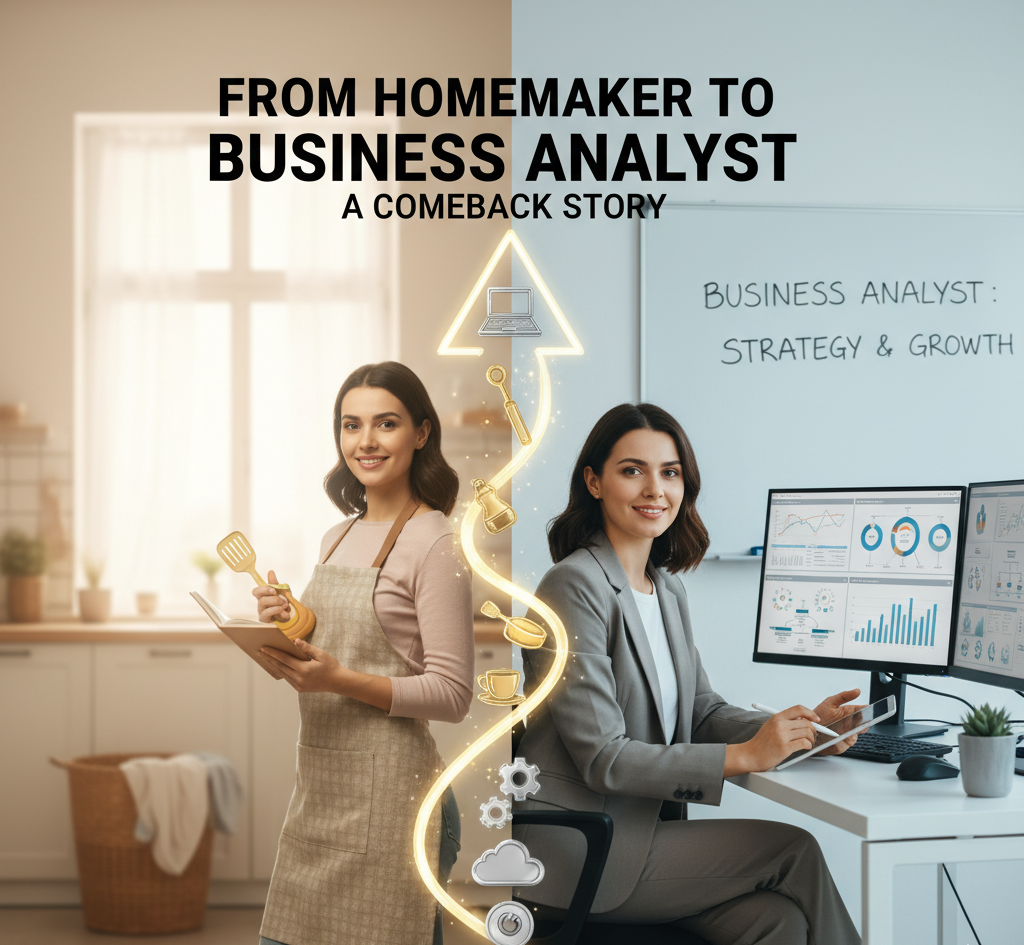
She laughed. “Business Analyst. I know, I know. I couldn’t have told you what that meant two years ago either.”
The story she told me over the next hour? Honestly, it was way messier and more real than any LinkedIn success post would have you believe.
The Part Nobody Posts About
Priya had quit her job as a software tester six years ago when her first kid was born. Normal story, right? Except here’s what happened – those six years just… flew by. And suddenly she’s looking at her son starting school and thinking, “Wait, who even am I anymore?”
“I’d become so good at being a mom and running the household,” she told me, stirring her latte for like the tenth time. “But Neha, I kid you not, I forgot I used to be good at other things too. I’d go to parties and when people asked what I do, I’d just say ‘oh, I’m a homemaker’ and watch their eyes glaze over. Like I’d become invisible or something.”
God, that hit hard. Because I’ve seen this happen to so many brilliant women. My own sister went through the same thing after her twins were born.
But here’s where it gets really tough – Priya tried going back to work after four years. Applied to like fifty jobs. Got maybe three interviews. And do you know what one interviewer actually asked her? “So what have you been doing all this time?”
As if raising tiny humans while managing a household isn’t doing anything. Ugh.
“I stopped applying after that,” she admitted. “It just felt… pointless, you know? The tech world had moved on. New tools, new everything. And I was just this outdated version of my former self.”
When Life Kicks You (In a Good Way, For Once)
So fast forward to about two and a half years ago. Priya’s at a kids’ birthday party – because that’s where all important life events happen when you have children, apparently – and she meets this woman, Anjali. They start chatting, and Anjali mentions she’d just gone back to work after a seven-year break.
“Seven years!” Priya told me, her eyes wide like she was still surprised. “And she wasn’t just working some entry-level job. She was a Senior Business Analyst. I was like, HOW?”
Turns out Anjali had done this return-to-work program through some organization called VishvaVidya. And before Priya could even finish asking about it, Anjali was already texting her links and contact info.
“I’ll be honest, I almost didn’t follow up,” Priya said. “I was scared. What if I tried again and failed? What if I was just too far gone?”
But something made her look into it anyway. Maybe it was seeing Anjali’s confidence. Maybe it was just hitting that point where staying stuck felt worse than trying and failing.
The Messy Middle Part
Here’s where Priya’s story gets real messy, and honestly, this is the part I wish more people talked about.
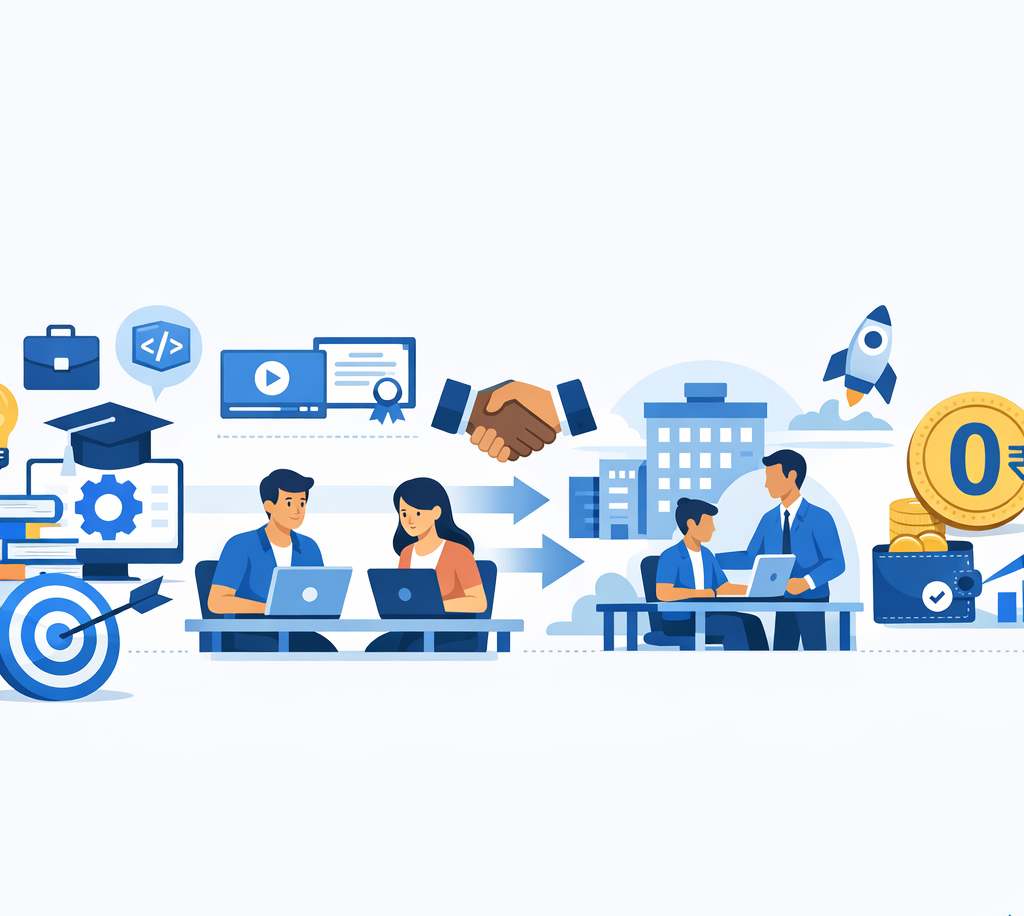
She enrolled in this Business Analyst program – VishvaVidya apparently has this whole thing for experienced professionals who want to pivot or return. But the first few weeks? She almost quit like five times.
“There were these kids – KIDS, Neha – who were just breezing through concepts I was struggling with. And I’m sitting there thinking, what am I even doing? I should just go home and accept that my time has passed.”
Her husband wasn’t being super supportive either, at least not at first. Not in a mean way, just in that skeptical “but what about the kids’ routine” kind of way. Money was tight because the program was free but she needed to pay for childcare during classes. Her mother-in-law kept making passive-aggressive comments about “abandoning family duties.”
And the imposter syndrome? Through the roof.
“There was this one day,” Priya said, and I could see her tearing up a little. “I was in a session about stakeholder management, and the mentor said something about understanding different perspectives. And suddenly I was like… wait. I DO know this. I’ve been managing stakeholders my whole life. My mother-in-law is like the most difficult stakeholder ever!”
We both cracked up at that. But also, she had a point?
The Actual Turning Point
What changed things for Priya – and she’s very clear about this – was her mentor. This woman, Rekha, who’d also taken a career break and knew exactly what it felt like to be the “old” one in the room, to doubt yourself, to feel like you’re bothering people by existing in professional spaces.
“Rekha didn’t baby me or give me that toxic positivity crap,” Priya said. “She’d be like, ‘Yeah, this is hard. You’re gonna feel stupid sometimes. Keep going anyway.’ And somehow that was exactly what I needed to hear?”
The program also had this practical side – actual projects, not just theory. Priya worked on real business cases, created actual requirement documents, and learned tools that companies were currently using. Not outdated stuff from ten years ago.
And slowly – painfully slowly – things started clicking.
Plot Twist: She’s Actually Good At This
About four months into the program, something shifted. Priya was working on this project analyzing customer feedback for a startup, and she just… got it. Like really got it.
“All those years of managing a household? I’d been doing requirements gathering without knowing it,” she explained. “When my son said he wanted a ‘cool’ backpack, I had to figure out what ‘cool’ actually meant to him. Functional requirements, non-functional requirements – I was doing all that! Just in a different context.”
Her mentor helped her reframe everything. Those years weren’t wasted time. They were just… different experience. The patience she’d developed dealing with toddler meltdowns? Super useful in client meetings. Her ability to juggle fifteen things at once? Perfect for managing multiple projects.
“I remember Rekha telling me, ‘Priya, you haven’t lost your edge. You’ve just sharpened it in different ways.'”
Honestly, I got goosebumps when she said that.
The Job Hunt (Still Messy, But Different)
Getting the actual job wasn’t some fairy tale either. Priya applied to tons of places. Got rejected from most. Had some really discouraging interviews where people clearly didn’t value her experience.
But she also had some good ones. Interviews where her career break wasn’t seen as this shameful gap but just… part of her story. Companies that actually valued the diverse perspective she brought.
She ended up at a mid-sized fintech company. Not a fancy tech giant, not some unicorn startup. Just a decent company with a good team that gave her a chance.
“My salary wasn’t what it would’ve been if I’d never left,” she admitted. “That sucked. Still sucks, honestly. But I was working again. Contributing. Having conversations that didn’t revolve around homework and meal plans.”
Where She Is Now (Real Talk)
It’s been almost two years since Priya started working. And look, it’s not all perfect. She still struggles with work-life balance. Her kids sometimes resent that mom isn’t always available anymore. She’s exhausted most days. There are times she wonders if it’s all worth it.
But when I saw her at that cafe last week? She was lit up in a way I haven’t seen in years.
“I’m not saying work defines me,” she said. “But having this part of my identity back? The part that solves problems and contributes and learns new things? I didn’t realize how much I’d missed it.”
She’s even started mentoring other women through VishvaVidya now. Paying it forward, as she calls it. Helping other homemakers see that their skills aren’t obsolete – they’re just translated differently.
If This Sounds Like You…
Look, I’m gonna be straight with you. If you’re sitting there reading this and thinking about going back to work but feeling terrified – I get it. Priya was terrified too. She almost didn’t try. Almost let fear win.
But here’s the thing she told me, and I keep thinking about it: “The worst thing wasn’t trying and failing. The worst thing was that feeling of being stuck, of having given up on myself before even trying.”
Are there programs that can help? Yeah. VishvaVidya does this whole thing with mentorship and training specifically for people returning to work. There are others too. The resources exist.
But honestly? The resource you need most is already there – it’s you. Your resilience, your adaptability, your ability to learn and grow. You managed a household during a pandemic, for crying out loud. You can definitely learn some new software tools.
The Real Ending
As we were leaving the cafe, Priya said something that’s been rattling around in my head: “You know what the craziest part is? I spent years feeling like I’d lost myself. Turns out, I’d just been becoming someone better.”
Your comeback story doesn’t have to look like anyone else’s. It doesn’t have to be perfect or inspirational or LinkedIn-worthy. It just has to be yours.
And maybe – just maybe – it starts with one small step. A coffee chat with an old colleague. A Google search for return-to-work programs. A message to someone who’s been where you are.
Priya started with a conversation at a birthday party. Where will your story start?