

Okay, so last Tuesday I’m sitting in this cramped coffee shop – you know the type, overpriced lattes and terrible WiFi – waiting for my friend Priya. She shows up twenty minutes late (classic Priya) but she’s practically glowing.
“Dude, I have to tell you something,” she says, not even sitting down properly. “Remember how I used to complain about spending my entire morning copying numbers from emails? Like, literally every single day?”
Of course I remembered. Priya had been ranting about this soul-crushing routine for months. Three hours of copy-paste, copy-paste, copy-paste. I’d stopped asking how her job was going because the answer was always the same.
“Well,” she continues, finally sitting down and spilling a bit of her coffee in the process, “I don’t do that anymore. At all.”
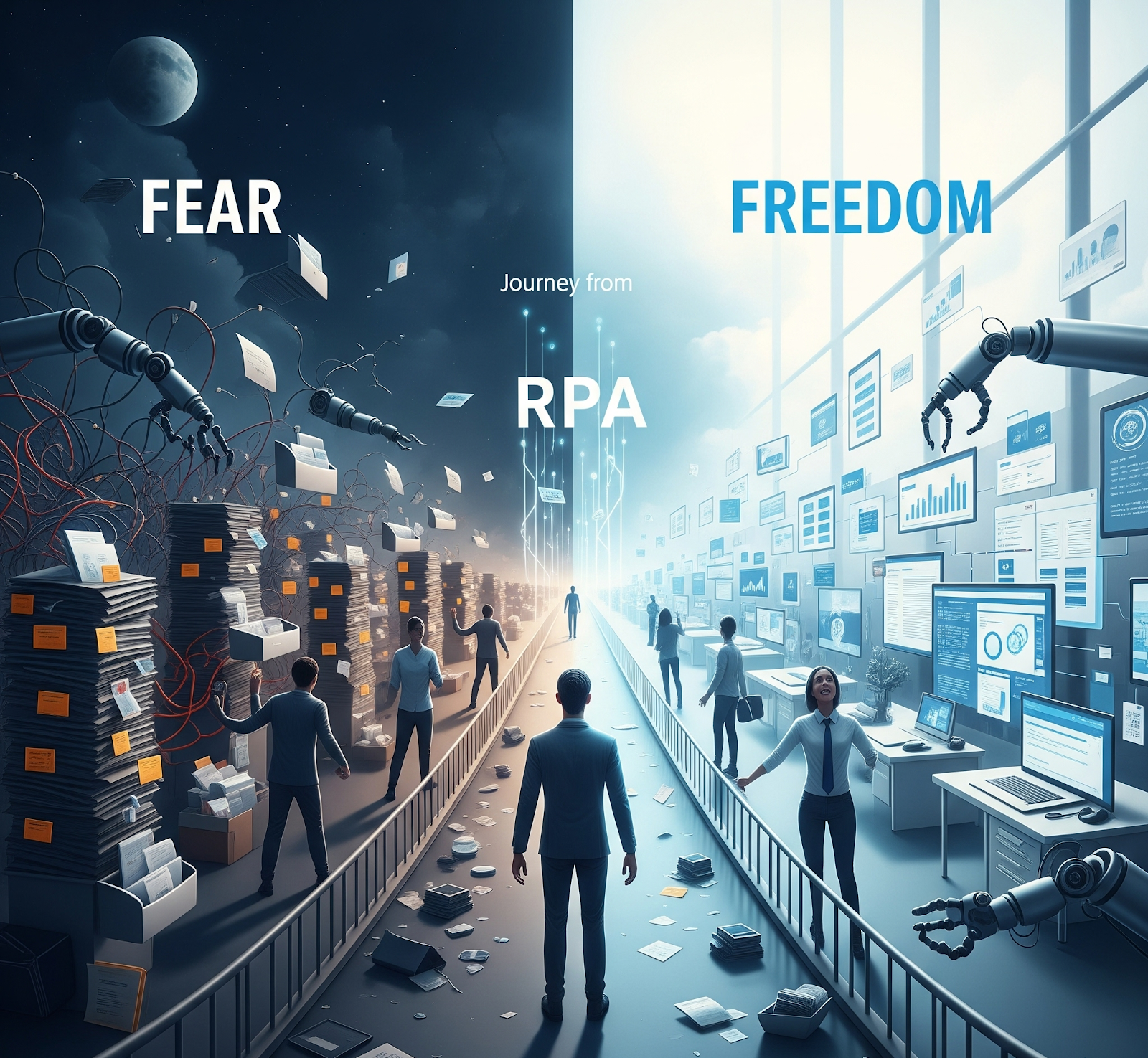
Turns out her company implemented something called RPA – Robotic Process Automation – and suddenly those three hours just… disappeared. Not the work, mind you. The boring, mind-numbing part of it.
“I actually get to think now,” she said. “Like, use my brain for real stuff instead of being a human copy machine.”
That hit me harder than I expected.
The Uncomfortable Truth About Where We’re All Headed
Here’s the thing nobody really wants to admit out loud: the job market is changing fast. Really fast. And most of us are just… hoping it doesn’t affect us?
I was scrolling through LinkedIn last week (don’t judge me, we all do it) and came across this stat that made me pause. By 2027 – that’s like, three years away – about 40% of jobs will need completely different skills than they do today.
Forty percent. That’s almost half.
My first reaction was panic. Then I thought about Priya, and how she went from dreading Monday mornings to actually being excited about work again. Maybe this whole technology thing isn’t the career killer we think it is.
My colleague Raj had a similar experience. Guy spent five years doing manual software testing – basically clicking the same buttons over and over, looking for bugs. Last year he learned RPA development and now he’s the one creating the automated tests.
“It’s weird,” he told me over lunch last month, “I went from being replaced by robots to being the guy who builds the robots. And honestly? I love it.”
What’s Actually Hot Right Now (Without the Tech Bro Hype)
Let me break down what’s really trending, in plain English:
RPA is everywhere because every company has those tasks that make people want to quit. You know the ones – data entry, report generation, moving files around. RPA handles that stuff so humans can do… well, human things.
AI and Machine Learning sound scary, but they’re mostly just really good pattern recognition tools. You don’t need to become a computer scientist. You just need to understand how to work with these systems.
Cloud stuff is basic now. Even my mom’s small business moved everything online during COVID and never looked back.
Data analytics is huge because every decision needs numbers backing it up these days.
The cool thing about RPA specifically? You don’t need to be a coding genius. I know people who picked it up in a few months and completely changed their career trajectory. Real people, not just the success stories you see on company websites.
My Messy Learning Journey (And What Actually Worked)
I’ll be honest – when I first heard about RPA, I rolled my eyes so hard I probably pulled a muscle. “Great, another tech buzzword,” I thought.
But then real results started happening around me.
My neighbor Meera had been out of work for five years raising her kids. Trying to get back into the workforce felt impossible – everything had changed, her skills felt outdated, her confidence was shot. She found this program that specifically helped people return to work, and they included RPA training as part of it.
Six months later? She’s working as a process automation specialist. Six months.
The transformation wasn’t just professional either. Watching her confidence come back was incredible. She went from feeling like she’d missed the boat to being the person her new colleagues come to for automation advice.
But here’s what nobody tells you about learning this stuff: you don’t have to learn everything at once. Actually, you shouldn’t try to.
The Learning Path That Won’t Drive You Crazy
Here’s what I’ve figured out from watching friends succeed (and fail) at this:
Start with problems you actually understand. If you work in finance, learn RPA for financial processes. If you’re in marketing, focus on marketing automation. Don’t try to boil the ocean.
Get your hands dirty fast. Reading about RPA is like reading about swimming – you don’t really get it until you jump in the water. Find ways to build actual things, even if they’re simple.
Find your people. This journey is way too hard to do alone. You need mentors, peers, people who’ve been where you’re trying to go.
That last point is huge. I recently discovered this organization called VishvaVidya that’s all about helping people navigate these career transitions. They’re not-for-profit, which immediately caught my attention – no hidden agenda, just genuinely trying to help people upskill.
What I love about their approach is they don’t treat everyone like they’re starting from zero. They meet you where you are, whether you’re a recent grad trying to stand out or someone like Meera who’s returning to work after time away.
The Real Talk About Making This Practical
The biggest mistake I see people make? Thinking they need to completely blow up their career to benefit from these technologies.
That’s usually not true.
Take HR, for example. Learning basic RPA doesn’t mean becoming a developer. It means automating the tedious parts of recruiting or onboarding so you can focus on the strategic stuff – building culture, developing people, solving real problems.
Or operations. Understanding data analytics doesn’t mean becoming a data scientist. It means being the person who can spot patterns and inefficiencies that others miss.
VishvaVidya gets this. Their programs range from 3-4 month intensive training to ongoing mentorship. The idea isn’t to transform everyone into techies – it’s about enhancing whatever you’re already good at.
Let’s Be Real About the Time Investment
Learning new tech skills takes effort. I’m not gonna sugarcoat that.
But it’s not the massive time commitment you might think. For RPA specifically, you can get functionally competent in 3-4 months if you’re consistent. That’s less time than it took me to get through the last season of Stranger Things.
My friend Arjun proved this. He works in banking, has two kids, barely has time to sleep. But he carved out an hour most evenings to work through RPA courses and practice projects.
Four months later, he’s the automation guy on his team. His manager keeps pulling him into strategic meetings. His career trajectory completely changed.
Not because he became a different person, but because he added one valuable skill to what he was already doing well.
If You’re Actually Ready to Start
Look, if any of this resonates with you, here’s my advice: stop overthinking and start small.
Pick one technology that solves problems you actually face. Look for programs that give you real hands-on experience – not just certificates you can add to LinkedIn.
Organizations like VishvaVidya provide structured pathways with actual human support, which makes all the difference when you’re trying to stay motivated through the inevitable frustrating moments.
Whether you’re fresh out of college, thinking about switching careers, or trying to get back into the workforce, these trending technologies can be your competitive edge.
The future belongs to people who can partner with these tools, not people who hide from them.
And honestly? The future’s already knocking on the door.