
Last month, I was sitting in a coffee shop in Koregaon Park when my friend Priya dropped a bombshell. “I’m quitting my marketing job,” she said, stirring her cappuccino with unusual determination. “I’m enrolling in a Business Analyst bootcamp.”
My first reaction? Pure confusion. BA bootcamp? In Pune? Was this even a thing?
Fast forward six weeks, and Priya’s already landed interviews with three different companies. Meanwhile, I’m here kicking myself for not taking her seriously sooner. Turns out, the business analyst bootcamp scene in Pune isn’t just thriving – it’s practically exploding.
The Reality Check That Hit Me Hard
Here’s what I didn’t realize until recently: Pune isn’t just an IT hub anymore. It’s becoming the go-to destination for professionals looking to pivot into business analysis. And honestly, the numbers make sense.
According to a recent industry report, BA roles in Pune have grown by 40% in the last two years. Companies like Infosys, TCS, and Wipro are actively hunting for skilled business analysts, and guess what? There aren’t enough qualified people to fill these positions.
“The demand is insane right now,” says Rohit, a senior BA at a Fortune 500 company I met at a networking event last week. “We’re seeing salaries jump from 8 lakhs to 15 lakhs for people with the right skills. But here’s the catch – you need to know what you’re doing.”
That’s where bootcamps come in.
What Makes Pune Perfect for BA Training?
Living in Pune for the past five years, I’ve watched this city transform into something special. It’s not just the perfect weather (okay, maybe that’s part of it). The real magic happens when you combine:
Industry Proximity: Almost every major tech company has a presence here. When you’re learning BA skills, having potential employers right in your backyard is huge.
Cost-Effectiveness: Compared to Mumbai or Bangalore, Pune offers quality training at reasonable prices. My rent alone would double if I moved to Mumbai for a similar program.
Networking Opportunities: The tech community here is tight-knit. Last Tuesday, I attended a meetup where three different people mentioned job openings in their BA teams.
The Bootcamp Experience: What Actually Happens
Let me be real with you – I was skeptical about the whole “bootcamp” concept. It sounded too good to be true. Learn complex business analysis in a few months? Come on.
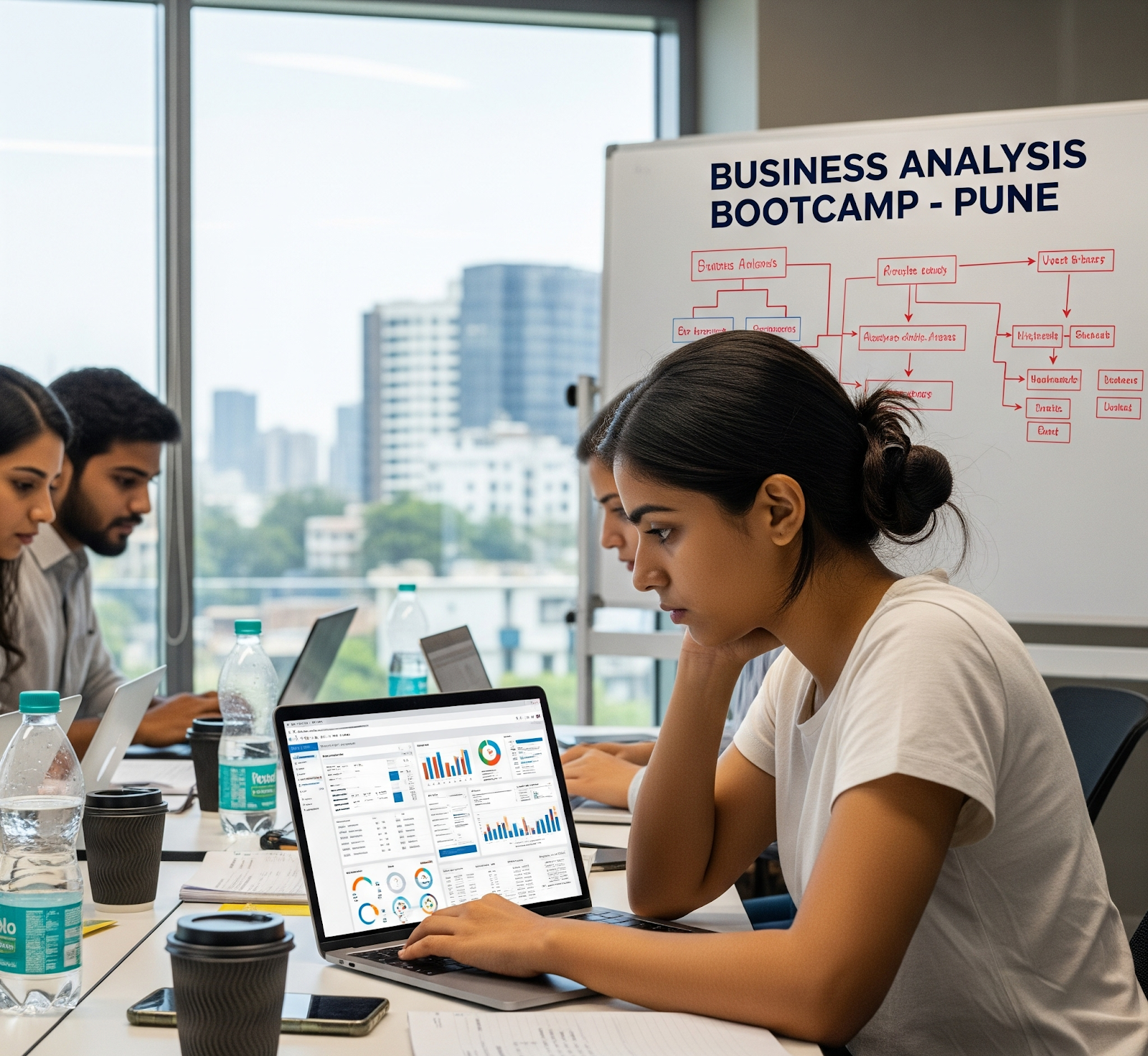
But after talking to several graduates and even sitting in on a few sessions, I’m convinced. Here’s what a typical BA bootcamp in Pune covers:
Requirements Gathering: You learn how to actually talk to stakeholders without wanting to hide under your desk. This was Priya’s biggest fear initially.
Process Mapping: Creating those flowcharts that make sense to both technical teams and business users. Harder than it sounds.
Data Analysis: Excel wizardry, SQL basics, and enough statistics to not embarrass yourself in meetings.
Documentation: Writing requirements that developers can actually use (revolutionary concept, right?).
Agile Methodologies: Because every company claims to be agile these days.
The Success Stories That Convinced Me
Remember Priya? She’s not the only one. I’ve been collecting stories from people who’ve made this transition, and honestly, some of them sound almost too good to be true.
There’s Amit, who went from being a mechanical engineer to landing a BA role at a fintech startup in just four months. “The bootcamp didn’t just teach me tools,” he told me over lunch yesterday. “It taught me how to think like a business analyst.”
Then there’s Sneha, who took a career break for her kids and thought she’d never get back into the corporate world. She’s now working remotely as a BA for a US-based company, earning more than she ever did before.
What’s interesting is that many of these success stories involve people who found structured support beyond just classroom training. Programs that offer mentorship, industry connections, and real project experience seem to make the biggest difference.
The Not-So-Pretty Truth About Bootcamps
Look, I’m not going to sugarcoat this. Not every bootcamp is created equal. I’ve heard horror stories too.
Some programs promise the moon and deliver… Well, let’s just say less than stellar results. The key is finding bootcamps that:
- Have instructors with actual industry experience
- Provide hands-on project work
- Offer job placement support
- Connect you with real mentors in the field
I recently discovered that organizations like VishvaVidya are addressing exactly these concerns. As a not-for-profit focused on bridging unemployment with fulfilling careers, they’ve developed a Business Analyst Program specifically for professionals with 3+ years of experience. What caught my attention is their emphasis on mentorship and industry connections – something many commercial bootcamps skip.
Making the Decision: Is It Right for You?
Here’s my honest assessment after weeks of research and conversations:
You’re a good fit if:
- You have some work experience (doesn’t have to be tech-related)
- You enjoy problem-solving and connecting dots
- You can handle ambiguity (because business requirements are never crystal clear)
- You’re willing to put in 3-4 months of serious effort
Maybe reconsider if:
- You’re looking for a magic bullet to career success
- You hate dealing with people (BA work is surprisingly social)
- You’re not ready to continuously learn (the field evolves constantly)
Three Months Later: Where I Am Now
So, did it work? Well, I’m writing this from my new desk at a mid-sized fintech company in Hinjewadi. My official title is “Junior Business Analyst,” and honestly, I love it.
Is it perfect? No. Do I sometimes feel like I’m drowning in acronyms and stakeholder meetings? Absolutely. But for the first time in years, I’m actually excited about Monday mornings.
My salary jumped by about 60% (though let’s be real, that’s partly because I was underpaid before). More importantly, I feel like I’m building something. Like my work actually matters.
The Pune tech scene has been amazing to navigate. There’s this whole community of BAs who meet every month at various cafés around the city. Last week, someone shared a job opening that wasn’t even posted publicly yet. The networking here is insane.
Plus, organizations like VishvaVidya are creating this whole ecosystem of support. They’re not just training people and throwing them into the job market – they’re building connections between mentors, mentees, and companies. It’s the kind of community support that makes career transitions actually sustainable.
If You’re Sitting on the Fence…
Look, I get it. Change is scary. Three months ago, I was you – stuck, uncertain, probably reading blogs at midnight instead of sleeping.
But here’s what I wish someone had told me: you don’t need to have it all figured out before you start. You just need to start.
Maybe begin by talking to people in the field. Attend a meetup (there are tons in Pune). Reach out to professionals on LinkedIn. Most people are surprisingly willing to share their experiences over coffee.
And if you decide to take the plunge, do your homework. Research programs, talk to alumni, and make sure you’re getting proper mentorship support. Organizations like VishvaVidya can be great starting points for understanding what career transition support actually looks like.
The worst-case scenario? You’ll learn something new about yourself and gain some valuable skills. The best case? Well, ask me again in six months, but so far, it’s looking pretty good.
Ready to explore what’s next? Start with one conversation. One Google search. One small step toward figuring out what you actually want to do with your career. Trust me, future you will thank present you for at least trying.